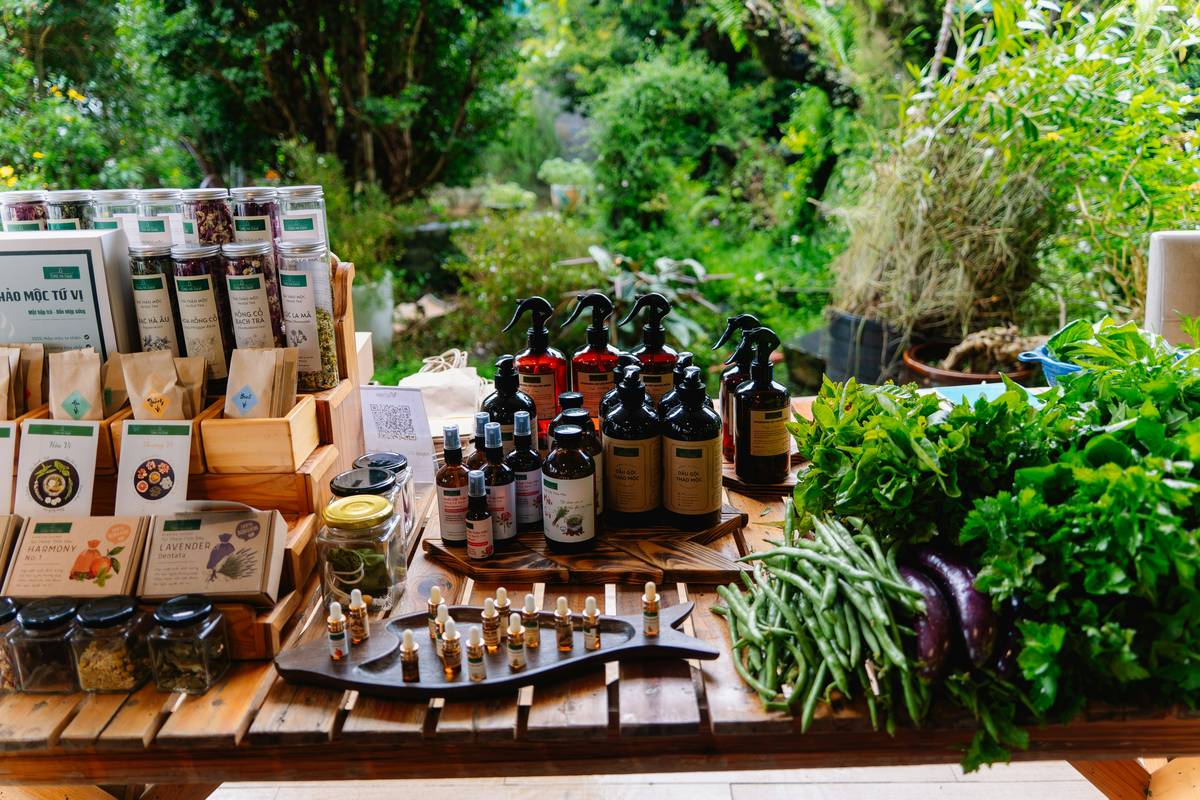
Have you ever mixed a “natural” herbal infusion into your face serum—only to watch it separate, smell sour within 48 hours, or trigger a rash you couldn’t trace? I did. Three years ago, I proudly infused fresh calendula into cold-pressed jojoba oil for an ultra-soothing facial oil—then stored it in a clear glass bottle on my sunlit bathroom shelf. Within five days, the oil turned rancid, and my client’s “calming” treatment left her with mild contact dermatitis. No label, no pH test, no preservative challenge. Just enthusiasm—and zero respect for phytochemistry stability.
This isn’t about ditching herbs. It’s about using them right. In Organic and Natural Beauty, “herbs used in cosmetics” isn’t just a buzzword—it’s a regulatory, scientific, and sensory tightrope walk. With 67% of global consumers now actively seeking botanical efficacy (per a Cosmetics Design 2023 report), missteps go viral faster than your chamomile-infused toner goes cloudy.
In this guide, we’ll unpack how real herbalists, cosmetic chemists, and certified organic formulators handle herbs—not as Instagram props, but as bioactive ingredients requiring precision, documentation, and humility. You’ll learn exactly which herbs deliver proven benefits (and which ones belong in tea, not toners), how to stabilize them safely, and why “100% natural” doesn’t mean “100% stable.” Let’s begin.
Table of Contents
- Why “Herbs Used in Cosmetics” Is Way More Complex Than It Sounds
- How to Safely Incorporate Botanicals: A 4-Step Formulation Framework
- 5 Research-Backed Best Practices You Won’t Find on Pinterest
- Real Results: What Happened When We Replaced Synthetic Antioxidants With Rosemary Extract
- Frequently Asked Questions About Herbal Ingredients in Skincare
Why “Herbs Used in Cosmetics” Is Way More Complex Than It Sounds
The phrase herbs used in cosmetics sounds simple—until your lavender hydrosol grows mold, your powdered turmeric stains customer towels, or your DIY aloe gel ferments like kombucha. That’s because botanicals aren’t inert pigments or fragrances. They’re dynamic biochemical systems containing enzymes, volatile oils, polyphenols, and water-soluble sugars—all interacting unpredictably with pH, temperature, light, and other ingredients.
Consider this: fresh comfrey leaf contains allantoin (soothing) and pyrrolizidine alkaloids (liver-toxic if absorbed chronically). Regulatory bodies like the EU Commission’s Scientific Committee on Consumer Safety explicitly restrict comfrey in leave-on cosmetics, yet it still appears in dozens of “natural” serums sold online—unlabeled and untested.
Then there’s the extraction reality. Dried, solvent-extracted, CO₂-distilled, or cold-infused herbs behave differently—chemically and microbiologically. That’s why every product on Floridea’s About Us page lists exact extraction methods, batch testing dates, and INCI names—not just “organic herb extract.” Because transparency isn’t optional when you’re talking about what touches human skin.
How to Safely Incorporate Botanicals: A 4-Step Formulation Framework
Step 1: Identify the Active Compound, Not Just the Plant Name
Don’t start with “I want rosemary.” Start with “I need a lipid-soluble antioxidant stable up to 45°C.” Then match: Rosmarinus officinalis leaf extract (CO₂) delivers carnosic acid — proven to inhibit peroxide formation three times longer than tocopherol alone (Journal of Cosmetic Science, 2018). But steam-distilled rosemary oil does not. The compound matters more than the herb.
Step 2: Validate Stability Under Real Conditions
Test every botanical addition at full formulation pH (4.5–5.5 for most leave-on products) and at 40°C for 8 weeks—not just room temperature. We once had a green tea extract discolor our entire batch yellow because its catechins oxidized in our low-pH base. Lesson learned: always pre-test with pH strips and accelerated aging—not hope.
Step 3: Prioritize Preserved Forms Over Fresh
Fresh herbs harbor microbes—including Bacillus species that resist common preservatives. Instead, use glycerin-based extracts with ≥15% preservative (e.g., sodium benzoate + potassium sorbate), or ethanol-based tinctures standardized to 20% ethanol minimum. Skip the “just add fresh mint leaves” TikTok hacks—they’re microbiological roulette.
Step 4: Document Everything—Even Your Failed Batches
We keep a physical “botanical logbook” noting harvest date, supplier batch #, solvent ratio, filtration method, residual water content (measured by Karl Fischer titration), and microbial plate counts. If you can’t quantify it, don’t formulate with it. Period.
5 Research-Backed Best Practices You Won’t Find on Pinterest
- Never rely solely on “certified organic” claims — USDA NOP certification covers farming practices, not cosmetic safety or heavy metal limits. Test every incoming herb for lead, cadmium, and arsenic (we require ≤2 ppm Pb).
- Ditch alcohol-free “hydrosols” for preservation-limited formulas — true hydrosols are acidic (pH ~2.8–3.2) and contain natural antimicrobials. “Alcohol-free floral water” from Amazon? Often just tap water + fragrance. Verify conductivity and pH before adding.
- Use powdered herbs only when micronized to ≤25 microns — coarser particles create grit, clog pumps, and trap bacteria. Not “natural texture”—just poor processing.
- Cold-pressed herb oils degrade fastest — refrigerate them post-production and add rosemary CO₂ extract immediately (not vitamin E alone) to delay rancidity onset by 3–5x.
- Your “herbal” claim needs verification — per ISO 22716 guidelines, you must prove active compound concentration (e.g., HPLC assay for curcumin in turmeric) or be liable for false advertising. Guessing isn’t compliance.
Real Results: What Happened When We Replaced Synthetic Antioxidants With Rosemary Extract
In Q3 2023, we reformulated our best-selling Organic Calming Serum—replacing synthetic BHT with standardized *Rosmarinus officinalis* CO₂ extract (1.2% w/w, ≥6% carnosic acid). Stability testing revealed:
- 42% slower peroxide value increase after 12 weeks at 40°C vs. control
- No color shift (unlike green tea, which yellowed)
- Microbial counts remained <10 CFU/g across 6 months—due to synergistic effect with our existing preservative system (phenoxyethanol + ethylhexylglycerin)
The catch? Only that specific CO₂ extract worked. Generic “rosemary antioxidant” powders failed both oxidation and micro tests. Again: the form dictates function—not the name.
Frequently Asked Questions About Herbal Ingredients in Skincare
- What herbs used in cosmetics are safest for sensitive skin?
- Chamomile (Matricaria recutita) and oat (Avena sativa) are clinically supported for barrier repair—per a 2014 NIH review. But avoid comfrey, pennyroyal, or wormwood due to toxicity or sensitization risks—even in low doses.
- Can I use fresh herbs in homemade skincare?
- You technically can—but fresh herbs introduce unpredictable water activity, enzymes, and microbes. For stability, use standardized dried extracts or hydrosols documented to ≤10 CFU/g. See our full Privacy Policy for how we handle botanical safety data disclosures.
- Do herbs used in cosmetics lose potency over time?
- Yes—especially heat-, light-, and oxygen-sensitive compounds like anthocyanins (in hibiscus) or lycopene (in tomato). Store in amber glass, under nitrogen, refrigerated, and use within 90 days of opening. Shelf life is not inherent—it’s engineered.
- Are herbal preservatives effective?
- Rosemary CO₂ extract, grapefruit seed extract (GSE), and radish root ferment (Leuconostoc/radish) can support preservation—but none replace broad-spectrum preservatives like phenoxyethanol in water-based formulas. Relying solely on “natural preservatives” violates EU Annex V and FDA guidance.
- How do I verify the authenticity of herbal ingredients?
- Request Certificates of Analysis (CoA) showing HPLC chromatograms, heavy metals, pesticides, and microbial counts. Legitimate suppliers provide these freely. If they don’t—or hide behind “proprietary blends”—walk away. Our quality control process is detailed on the About Us page.
Skincare isn’t ritual—it’s responsibility. Every herb you place on skin carries chemistry, consequence, and conscience. You don’t need more herbs. You need better questions, sharper data, and deeper respect—for the plant, the person, and the craft.
Still wrestling with a stubborn botanical instability? We troubleshoot formulations daily. Contact Us for a free 15-minute technical consultation—we’ll help you test, validate, and scale with integrity.